

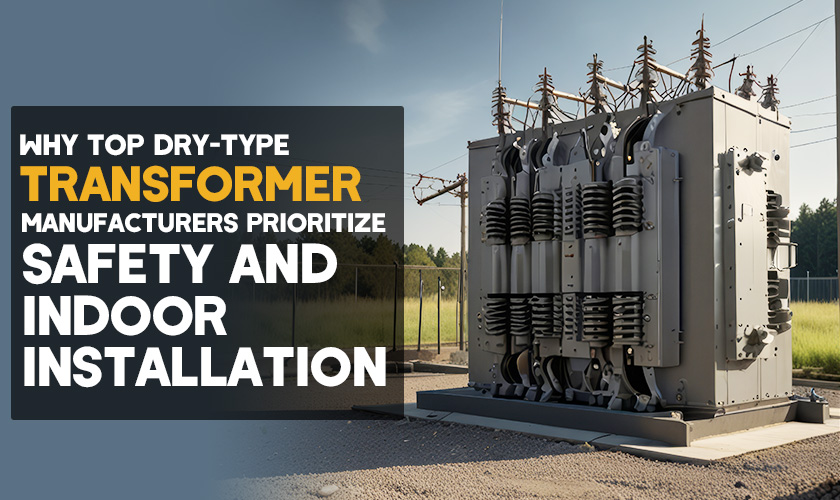
If you’ve ever walked into a hospital, shopping mall, data center, or high-rise commercial building, you’ve likely encountered a transformer doing its job inside. If that transformer is indoors, it’s probably a dry-type unit. This is why dry-type transformer manufacturers emphasize safety and indoor installation.
So why are dry-type transformers preferred for indoor environments? And why is safety such an important topic? Let’s break it down clearly—no heavy jargon, just straightforward logic.
First Things First: What Makes Dry Type Transformers Different?
Unlike oil-filled transformers, dry-type transformers don’t use liquid insulation. They rely on air, epoxy resin, or cast resin insulation systems. This key difference changes everything.
Without oil, there’s no risk of leakage, spills, or fires from flammable insulating fluids. This advantage is a major reason why dry-type transformer manufacturers create these units specifically for safe indoor use.
When installing electrical equipment in buildings where people work, shop, or live, safety is not just important—it’s essential.
Why Safety Is the Top Priority
Let’s face it, no facility manager wants to worry about fire hazards from electrical equipment. This is where dry-type transformers excel.
Since they contain no oil, the overall fire risk is much lower. That’s why you’ll find dry-type transformers in hospitals, schools, metro stations, and office complexes.
Top manufacturers take extra steps by using high-quality insulation materials that can endure extreme temperatures and electrical stress.
Many modern dry-type transformers are designed to be self-extinguishing, meaning that even in rare fault situations, the fire risk remains minimal.
With low smoke emission and non-toxic insulation, it’s clear why safety is a major selling point.
Why Indoor Installation Makes So Much Sense
Now let’s discuss indoor installation. Why do dry-type transformer manufacturers prefer indoor setups? Because dry-type transformers are built for these environments.
Without oil, there’s no need for large containment pits, oil drainage systems, or complicated fire-suppression systems. This simplifies and cleans up the installation process.
Indoor spaces also shield transformers from dust, moisture, rain, and extreme weather conditions that can shorten the equipment’s life if left outdoors.
From a design perspective, dry-type transformers are compact and quieter than oil-filled units. This makes them suitable for indoor electrical rooms where space is tight and noise matters.
Reduced Maintenance, Fewer Headaches
Here’s something plant managers and building owners really value: maintenance.
Oil-filled transformers require regular oil testing, filtration, and monitoring. Dry-type transformers? Not as much.
With no oil to degrade, leak, or contaminate, maintenance needs are significantly less.
This is another reason dry-type transformer manufacturers strongly endorse them for indoor installations.
Fewer maintenance tasks lead to lower operational costs and less downtime, which benefits commercial and industrial users alike.
Environmental and Regulatory Advantages
Today, safety isn’t only about fire prevention—it’s also about environmental protection.
Dry-type transformers don’t risk oil spills contaminating soil or groundwater. This makes them eco-friendly and simpler to comply with current safety and environmental regulations.
Many dry-type transformer manufacturers design their products to meet strict international and Indian standards for indoor use, fire safety, and energy efficiency.
For buildings needing green certification or strict compliance, dry-type transformers are often the favored choice.
Real-World Applications Tell the Story
Look around, and you’ll see dry type transformers in high-rise buildings, airports, shopping malls, data centers, underground substations, and even renewable energy installations.
These settings demand high safety, reliable performance, and compact designs—all areas where dry type transformers shine.
This widespread use isn’t by chance. It results from years of engineering focus by leading dry-type transformer manufacturers, who understand that indoor installations require a different approach than outdoor or heavy-industrial setups.
Final Thoughts
In the end, the reason dry type transformer manufacturers prioritize safety and indoor installation is straightforward—they’re designed for environments where people, property, and reliability are crucial.
With lower fire risk, minimal maintenance, environmental safety, and compact design, dry-type transformers meet the needs of modern indoor applications.
At Makpower Transformers, we produce high-quality dry-type transformers engineered for safety, efficiency, and indoor reliability.
Our designs meet industry standards and cater to the specific needs of commercial, industrial, and infrastructure projects.
Looking for a dependable partner among dry-type transformer manufacturers?
Contact Makpower Transformers today, and let our experts help you find the safest and most efficient solution for your indoor power needs.
Related Posts

Dry Type vs. Oil Type Transformers:What You Need to Know
Transformers are getting more popular for modifying the supply.....
What is Transformer Oil & Its Importance
Transformer oil, also known as insulating oil, has a crucial.....

What are The Main Functions of a Transformer?
Transformers play a significant role in efficient electrical energy.....

Why Transformers Are Essential to the Industrial Sector?
Sufficient power supply is the backbone of any industrial operations.....