

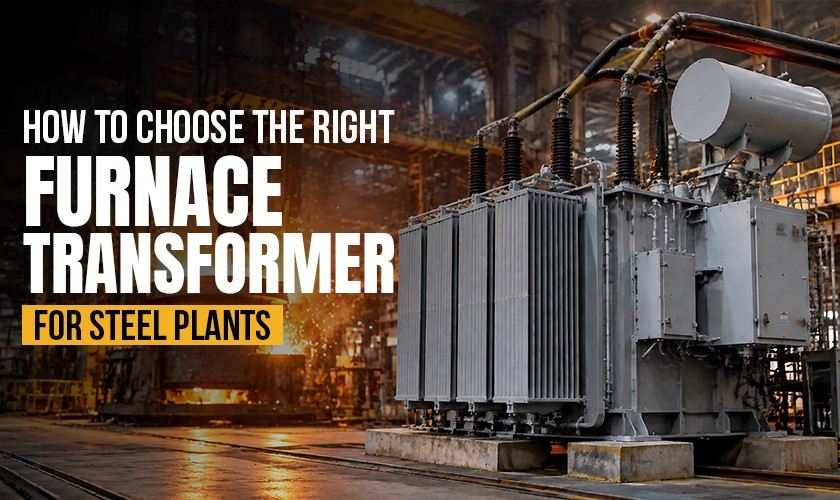
In today’s industrial sector, steel plants operate under the most demanding thermal and electrical conditions. Without a stable, reliable power supply, each stage of production remains incomplete, from melting scrap to refining steel. A transformer is the soul of an electric arc furnace system and is responsible for transforming electrical energy into the required voltage. Moreover, the latest features of the transformer can make furnace operation easier.
While choosing the appropriate furnace transformer for a steel plant you have to consider a few factors. It is a misconception that you need to select a furnace transformer based on the power rating that would be beneficial for your steel plant. If a selection process is planned well, the operation becomes efficient, and you can expect steady melting. Moreover, there is longevity in the performance of a furnace transformer. To choose the right furnace transformer, you have to consider the points below.
Know About the Furnace and the Operating Requirements
One of the most important points is to know about the furnace and the type it will serve. It has been observed that steel plants may implement AC or DC electric arc furnaces based on the production process. The aforementioned furnaces have different operating features and place important demands on the transformer.
You have to select the transformer based on the operating current, furnace capacity, and required secondary voltage. A transformer tailor-made for furnace applications can handle the demanding situations associated with melting and refining the steel. In this case, a steel plant transformer plays a pivotal role and is considered a part of the entire furnace system.
Choose the Right Power Rating
Power rating is one of the most critical factors that need to be considered when selecting a steel melting transformer. The transformer needs to give enough power for the furnace but does not need to be oversized.
An inadequately sized transformer may fail to meet the needs of the furnace. On the other hand, an oversized transformer will lead to higher costs of investment and may not offer the best operating performance. After considering production targets, furnace capacity, and electrical load requirements, you have to select the right rating.
Never Overlook the Voltage and Tap-Changing Requirements
When it comes to many stages of melting and refining, the furnace operations may require different levels of voltage. A furnace transformer selection is incomplete without voltage requirements and tap-changing capability. Based on the application of the transformer, it may require an on load or a motorized off set tap changer.
The best electric arc furnace transformers have the proper configuration. They can be configured with an in-tank or external on load tap changer. According to the furnace voltage requirement, you need to choose the proper arrangement.
Analyze the Requirement for a Series Reactor
Talking about the arc furnace transformer, arc stability is a factor that takes centre stage. An arc furnace with electric conditions leads to significant fluctuations. Later on, stable arc operation becomes crucial for perfect melting.
A series reactor plays a crucial role in this stage. Moreover, it can also maintain a lower electrode current with an extended arc length. A steel plant can choose an in-built and external series reactor as per the furnace configuration, electrical requirements, and space availability.
Cooling Requirements Must Be Considered
In most cases, furnace transformers are operated at high loadings, and it is therefore critical to have proper cooling systems. High temperatures will influence insulation, winding, oil quality, and longevity of the transformer.
It follows that proper cooling must be considered in terms of the transformer rating, losses, conditions, and environment where it is installed. An efficient cooling system will enable the transformer to perform as expected.
Mechanical and Electrical Robustness are Crucial
The conditions under which steelmaking takes place may be challenging for electrical machinery. For that reason, the transformer to be used in steel industries must have adequate electrical and mechanical construction.
Some of the factors to consider are winding construction, insulation, short-circuit rating, core construction, tank construction, and cooling systems. Many transformer productions use highly conductive copper or aluminum conductors with insulation based on the specific application.
The winding process includes clamping and drying in an attempt to increase short-circuit rating and minimize hot spot problems.
Wrapping Up
Choosing the appropriate furnace transformer for applications within the steel industry calls for a thorough analysis. It involves the aspects of power rating, type of furnace, voltages needed, tap changing mechanisms, arc stabilization, cooling, construction, testing, and customizing the transformer.
An appropriate transformer should have the capacity to sustain operation in harsh furnace environments. Makpower Trans-Systems is a reliable source of transformer products for industrial applications, such as furnaces. Our Electric Arc Furnace Transformers can be customized to cater for various applications within both the AC and DC arc furnace environments.
Related Posts

Dry Type vs. Oil Type Transformers:What You Need to Know
Transformers are getting more popular for modifying the supply.....
What is Transformer Oil & Its Importance
Transformer oil, also known as insulating oil, has a crucial.....

What are The Main Functions of a Transformer?
Transformers play a significant role in efficient electrical energy.....

Why Transformers Are Essential to the Industrial Sector?
Sufficient power supply is the backbone of any industrial operations.....