

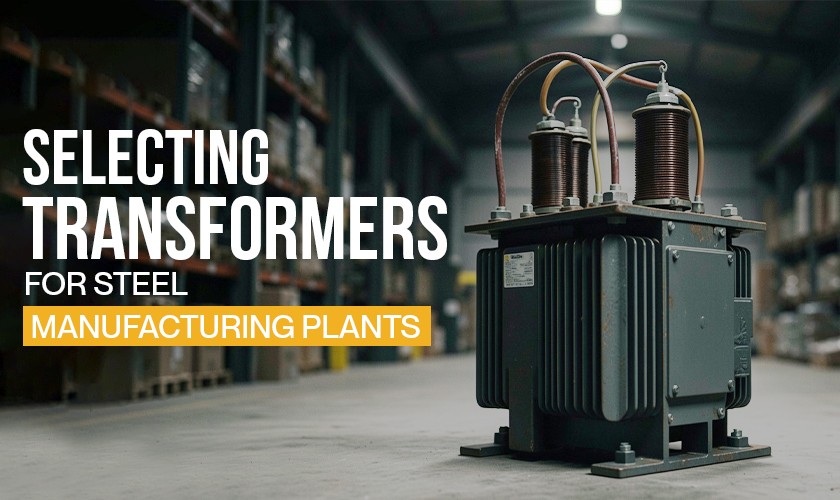
Steel manufacturing is about as energy-intensive as industrial processes get. Electric arc furnaces, induction furnaces, rolling mills, continuous casting lines: every stage runs on power that has to stay stable. That's what makes picking the right steel plant transformer a real production issue, not just a line item on a purchase order. It touches efficiency, equipment reliability, and safety all at once.
Steel plants don't behave like typical industrial loads. Loads swing fast, fault currents run high, motors start frequently, and the electrical environment is thick with harmonics. A transformer built for this kind of duty has to handle all of that and still deliver consistent performance over a long working life.
This guide walks through what actually matters when specifying a transformer for steel manufacturing.
Understanding the Electrical Demands of Steel Plants
Steel production puts a different kind of stress on electrical infrastructure than most other industries. Typical challenges include:
- High and rapidly fluctuating electrical loads
- Frequent overload conditions during production cycles
- Large motor starting currents
- High short-circuit stresses
- Harmonics generated by power electronic equipment
- Continuous or near-continuous plant operation
These conditions shape transformer sizing, insulation design, cooling systems, and protection requirements. Ignore them at the specification stage, and you're looking at overheating, shortened insulation life, heavier maintenance, and downtime nobody planned for.
Key Factors When Selecting a Steel Plant Transformer
Getting this right means looking at the full electrical and operational picture, not just the nameplate rating.
Transformer Capacity
Base capacity on:
- Maximum connected load
- Simultaneous operating load
- Peak production demand
- Future plant expansion
Size only for today's load and you box in future production. Oversize by too much and capital costs and no-load losses climb for no real benefit. A detailed load study is the best starting point for getting the number right.
Short-Circuit Strength
Steel plants run relatively high fault levels, a byproduct of heavy-duty equipment and tightly interconnected power systems. The transformer needs mechanical and thermal strength to withstand short-circuit forces without damage. The Central Electricity Authority (CEA) recommends designing transformers to withstand specified short-circuit conditions in line with applicable standards and project requirements.
Temperature Rise and Insulation Performance
Transformers in steel plants regularly deal with:
- High ambient temperatures
- Heavy loading
- Continuous operation
- Dust and process heat
Under that kind of pressure, insulation performance becomes one of the biggest factors in how long the transformer actually lasts. Choosing the right insulation class and permissible temperature rise slows insulation ageing and pays off over the transformer's working life.
Cooling Method
Cooling shapes operating temperature and how the transformer holds up under varying load. Common methods include:
- ONAN (Oil Natural Air Natural)
- ONAF (Oil Natural Air Forced)
- OFAF (Oil Forced Air Forced)
Which one fits depends on transformer capacity, where it's installed, expected loading patterns, and site conditions. Higher-capacity units feeding heavy industrial loads often need forced cooling just to hold acceptable operating temperatures.
Duty Cycle
Steel plants don't run on stable, predictable demand. Electric arc furnaces, rolling mills, and large drives create cyclic loading that puts extra thermal and mechanical stress on a transformer well beyond what the nameplate suggests. Design around the actual operating duty, not just the rated figure.
Common Transformer Applications in Steel Plants
Steel plants use transformers for the following reasons:
| Steel Plant Application | Typical Transformer Requirement |
|---|---|
| Electric arc furnaces | High-current furnace transformers built for frequent load swings |
| Induction furnaces | Transformers rated for continuous heavy-duty operation |
| Rolling mills | Distribution transformers feeding large motors and drives |
| Continuous casting | Reliable auxiliary power transformers for process equipment |
| Plant utilities | Distribution transformers for lighting, HVAC, compressors, and auxiliary systems |
Each application runs its own electrical profile, which is exactly why proper specification has to happen at the planning stage, not after equipment is already on order.
Reliability Features Worth Considering
Steel plants run on tight production schedules, and an unexpected electrical failure can mean real downtime. When you're evaluating a steel industry transformer, these features are worth the extra look.
Online Condition Monitoring
Monitoring tracks parameters like oil temperature, winding temperature, load current, and cooling system status in real time. Catching an abnormal reading early is what makes predictive maintenance possible, instead of finding out about a problem after it's already caused one.
Effective Protection Systems
Protection devices should match the transformer's design and application. Common ones include:
- Buchholz relay
- Pressure relief device
- Oil level indicator
- Temperature indicators
- Surge protection
- Differential protection through associated protection schemes
These improve fault detection and limit how much damage a fault actually does.
Robust Insulation System
Steel manufacturing environments hit transformers with thermal stress, electrical stress, and environmental contamination all at once. A high-quality insulation system is what keeps the unit reliable under that combination, not just on paper but over years of service.
Ease of Maintenance
Routine maintenance shouldn't require shutting production down for hours. Look for:
- Easily accessible accessories
- Clearly labelled terminals
- Convenient sampling points
- Accessible cooling equipment
Simpler maintenance means shorter service windows and better plant availability.
Plan for Future Production Expansion
Steel plants tend to grow by adding furnaces, rolling equipment, or entire production lines. Factor into transformer selection:
- Expected production growth
- Future electrical demand
- Additional feeder requirements
- Spare capacity in the power distribution network
Build in reasonable design margin during procurement, and you cut down the odds of replacing the transformer early once the facility actually grows.
Choose a Transformer That Matches the Process
Specifying a transformer for a steel plant is never just about hitting a kVA number. It has to handle fluctuating loads, high fault levels, elevated operating temperatures, and continuous industrial duty, all while staying reliable.
Weighing load characteristics, cooling requirements, short-circuit strength, insulation performance, protection systems, and future expansion together, plant engineers end up with a transformer that supports production for its full service life, with fewer surprises and lower lifecycle costs along the way. For steel plants of various scales, Makpower Trans-Systems manufactures transformers that support their energy needs.
Related Posts

Dry Type vs. Oil Type Transformers:What You Need to Know
Transformers are getting more popular for modifying the supply.....
What is Transformer Oil & Its Importance
Transformer oil, also known as insulating oil, has a crucial.....

What are The Main Functions of a Transformer?
Transformers play a significant role in efficient electrical energy.....

Why Transformers Are Essential to the Industrial Sector?
Sufficient power supply is the backbone of any industrial operations.....