

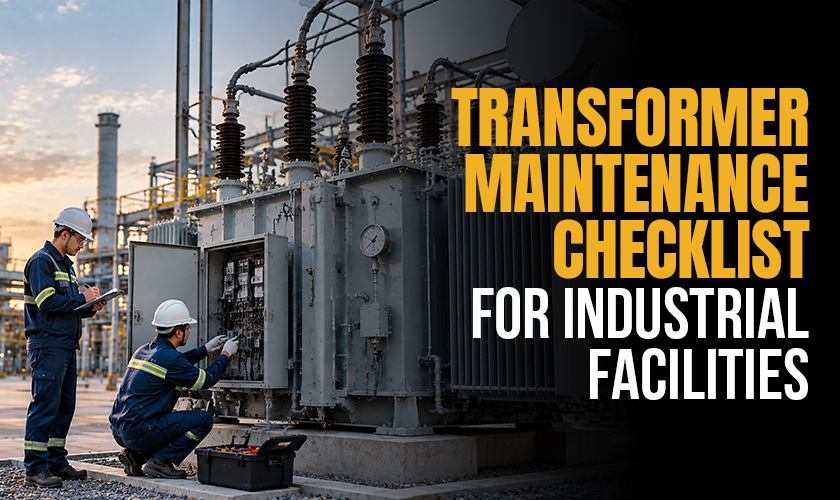
Transformers represent one of the key assets within any manufacturing facility. These devices ensure efficient and dependable delivery of electrical power to furnaces, manufacturing equipment, distribution networks, and other necessary equipment. Though transformers work behind the scenes, their state can have a direct impact on plant productivity, energy efficiency, safety, and downtime.
This is why adherence to a properly formulated transformer maintenance checklist proves to be vital. Inspection and servicing can allow spotting of emerging issues before any expensive failures occur. Whether you have power, distribution, furnace, or dry-type transformers in your manufacturing facility, a transformer maintenance checklist can prove effective.
Role of Transformer Maintenance
The majority of industrial transformers have to function under extreme conditions, which include high loads, heat, dust, humidity, and electrical stresses. Under the influence of these factors, various problems may arise in the insulation, connections, cooling system, oil in the transformer, etc.
Maintenance of industrial transformers allows diagnosing problems like excessive heat, oil degradation, loose connections, insulation failure, corrosion, and unusual electrical behavior of the transformer in the early stages.
Maintenance of a transformer is not supposed to be a process of fixing the equipment in case of malfunctioning. It must include inspection, testing, and monitoring. These activities constitute the basis of transformer preventive maintenance.
Transformer Maintenance Checklist: Important Areas to Inspect
A practical transformer inspection checklist should be carried out considering both internal and external operational parameters. These may vary depending on the type, rating, operational environment, loading of the transformers, and other manufacturer recommendations.
1. Performing a Visual Inspection
Begin by performing a careful visual inspection of the transformer and its immediate surroundings.
The following signs must be looked for:
- Oil leaks on the transformer itself, valves, radiators, and joints
- Corrosion, cracks, dents, or physical damage
- Overheating on the terminals and connections
- Overheating on the terminals and connections
- Unusual build-ups of dust, dirt, or moisture
- Any unusual noises, vibrations, or smell of burning
- Gauges and other components should be in proper working order.
It is also important to inspect the surroundings. The transformer must be properly ventilated and protected from moisture, dust, and corrosive agents.
2. Transformer Oil Testing
In case of oil-filled transformers, oil quality is one of the key parameters which helps in assessing the status of the transformer. The oil in transformers serves the dual purpose of providing insulation and cooling, but over time, the characteristics of the oil get affected due to various factors like heat, moisture, oxygen and electrical stress.
A good maintenance program would include testing of the oil by conducting tests like:
- Breakdown Voltage (BDV)
- Moisture Content
- Acid Value
- Interfacial Tension
- Dissolved Gas Analysis (DGA)
- Furan Analysis
- Resistivity and Dissipation Factor
Based on the test findings, the need for filtration, dehydration, reclamation or replacement of the oil can be decided.
3. Check the Cooling System
Heat management is critical to ensure proper operation of the transformer. Overheating may lead to accelerated aging of insulation and possible failure of the transformer.
While conducting routine checks of your transformer, pay special attention to radiators, cooling fans, pumps, heat exchangers, and relevant control systems where necessary. Make sure that airflow is not impeded by dust and other contaminants and check that all cooling system parts work properly. Depending on the transformer design and purpose, different types of cooling system arrangement are used.
4. Inspect Electrical Connections
Improper connections between the electrical components can result in resistance, overheating, arcing and finally the failure of the equipment itself. Check terminals, cable connections, bushings, and other readily accessible connections for any signs of loose or overheated connections, which should be tightened as per technical specifications.
Electrical testing may also give information on the condition of the transformer. Based on the type of equipment and the maintenance program, they could consist of winding resistance, insulation resistance, voltage ratio, impedance, etc.
5. Temperature and Load Monitoring
Temperature and loading must be checked regularly. Continued overloading or insufficient cooling will result in high temperatures of the transformer and faster insulation aging.
Note the temperature values and compare them with normal operation values and maximum allowable values given by the transformer’s manufacturer. An unexpected temperature change needs to be analyzed. Likewise, check load levels. Continuous overload operation requires reconsideration of load distribution.
Keep Your Transformers Efficient through Appropriate Transformer Maintenance Strategy
The Transformer maintenance program is not just a standard list. It is an essential element in safeguarding the electrical system that will keep your industrial facility operational. Visual inspection, oil sampling, cooling system examination, electrical tests, loading test, and documentation are among the practices that can be used to detect potential problems in advance.
For industrial facilities that are seeking dependable transformer services and technical skills, Makpower Trans-Systems provides various types of transformers. It involves the furnace, power transformers, distribution, dry-type, rectifier/converter duty transformers and others. The strategy used by the company in its manufacturing and testing activities is quality-oriented.
Related Posts

Dry Type vs. Oil Type Transformers:What You Need to Know
Transformers are getting more popular for modifying the supply.....
What is Transformer Oil & Its Importance
Transformer oil, also known as insulating oil, has a crucial.....

What are The Main Functions of a Transformer?
Transformers play a significant role in efficient electrical energy.....

Why Transformers Are Essential to the Industrial Sector?
Sufficient power supply is the backbone of any industrial operations.....