
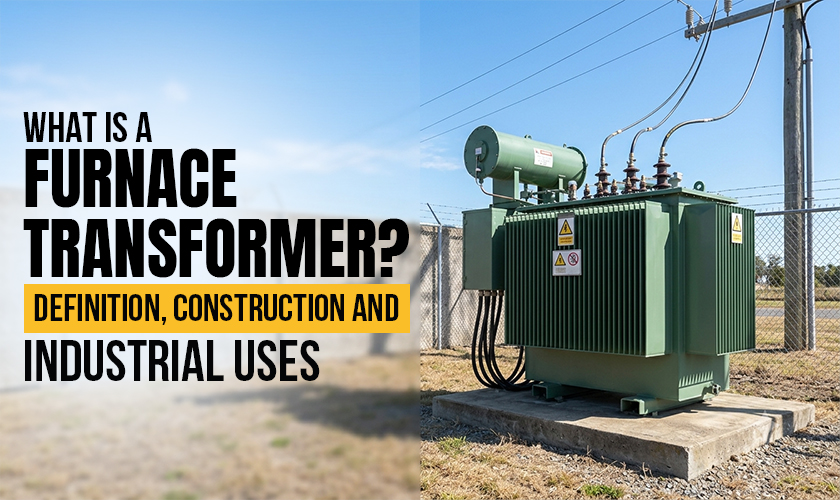
Without a reliable electric power supply, industrial furnaces cannot perform high-temperature operations. These high-temperature operations involve refining, steelmaking, and metal melting. Demanding electrical conditions are essential for these processes. It has often been observed that standard transformers are unable to handle the demanding electrical conditions. Hence, a furnace transformer comes into foreplay.
The furnace transformer is a special type of transformer that supplies necessary electricity for industrial furnaces. This transformer facilitates the conversion of electricity into the desired voltage and current level suitable for various processes of heating and melting. The construction of the transformer is capable of operating under extreme working conditions as well as ensuring steady performance of the furnace.
Knowing what a furnace transformer is, the construction, and areas of application will help to make the right choice when it comes to industrial electrical equipment.
Overview of the Furnace Transformer
A furnace transformer is a robust industrial transformer that serves to provide electrical power to furnaces used for melting, heating, and refining metals. The transformer changes input voltage to output voltage and at the same time supplies the necessary high current.
Unlike ordinary power transformers, a furnace transformer is expected to work with different electrical loading and severe thermal conditions. The construction of the electrical and mechanical parts of the transformer considers a few aspects. These aspects are short-circuit stress, high secondary current, and frequent loading changes.
Moreover, the definition of a furnace transformer may vary depending on its purpose. So, for instance, transformers for electric arc furnaces have different specifications than induction melting or submerged arc furnace transformers.
Based on the specific furnace and its production needs, different kinds of cooling systems, voltage regulation, winding, and reactor placement are used in these transformers.
Working of a Furnace Transformer
The principle of furnace transformer operation is based on electromagnetic induction. A transformer transmits electrical energy from one or more windings to another through a magnetic core without the need for electrical connection between the primary and secondary circuits.
The process of operation usually includes the following steps:
- 1. Power supply input: Electrical energy is received by the transformer through its primary winding with a specified input voltage
- 2. Creation of magnetic flux Alternating current in the primary winding creates magnetic flux in the transformer core.
- 3. Transformation of voltage: Voltage is induced in the secondary winding due to the magnetic flux in accordance with the turns ratio.
- 4. High current output: Secondary winding provides the specified voltage and current for the furnace circuit.
- 5. Generation of heat: Energy provided by the furnace is transformed into heat energy using the furnace's mechanism.
The output parameters depend on the furnace purpose. In some cases, low voltage and extremely high currents are needed, and for others certain values of voltage and frequency. The appropriate selection of an industrial transformer is important for ensuring the necessary electrical conditions in the furnace circuit.
Construction of a Furnace Transformer
Furnace transformers have various parts that function collectively to manage high electrical loads, temperature differences, and mechanical stress. The design of the transformer is customised based on the type of furnace, capacity, and operational conditions.
They include:
1. Magnetic Core
The magnetic core serves as the medium through which the magnetic flux flows from the primary to the secondary winding. It is made from laminations of CRGO Steel. These laminations help to reduce the effect of eddy currents on magnetic properties. Various methods of constructing magnetic cores can be used depending upon the efficiency needed.
2. Primary and Secondary Windings
These windings are responsible for enabling voltage transformation and carrying electric current. Aluminium conductors with suitable insulation or the best conductivity coppers are used to create these windings. When it comes to furnace applications, winding design plays a pivotal role. The reason behind it is that the transformer can deliver higher secondary currents. Better insulation, cooling ducts, and mechanical clamping allow it to handle thermal stress and enhance short circuit bearing capability.
3. Transformer Tank
The transformer tank contains the core and winding assembly. In the case of oil-cooled furnace transformers, the tank also contains insulating oil, which is used for electrical insulation and heat dissipation. The tank is designed to withstand operating pressure, thermal changes, and mechanical stress. This design can also include accessories and cooling apparatus.
4. Cooling System
While operating, the furnace transformers generate a specific amount of heat. It is specific when supplying higher current for long-term periods. An efficient cooling system is mandatory for maintaining safe operating temperatures. Based on the transformer application and capacity, the cooling arrangements are decided. It is better to choose the transformer based on the operating conditions and ratings.
5. Tap Changer
The tap changer is a mechanism that allows the adjustment of the transformer voltage ratio in accordance with the furnace’s varying demands. The furnace transformer can have an On-Load Tap Changer, which enables the variation of voltage ratio even when the transformer is operating. On the other hand, an Off-Circuit Tap Changer, which requires the de-energising of the transformer before adjustment.
6. Series Reactor
An electric arc furnace transformer sometimes contains a series reactor either in the same tank or as a separate unit. This serves to help control the current and electric arc by affecting the circuit reactance.
Various Types of Furnace Transformers
There are several types of furnace transformers that can cater to the electricity needs of various industrial processes.
1. Electric Arc Furnace Transformers
The electric arc furnace transformers provide the necessary electricity needed to melt scrap metal and support the steel refinement process. These transformers are made to withstand variable loading conditions and high current flow. In some models, series reactors and On-Load Tap Changer arrangements are used to stabilize the arc and regulate the voltage. These transformers are used in steel mills and metal processing plants.
2. Submerged Arc Furnace Transformers
The submerged arc furnace transformers are used for processes that include submerging electrodes in the raw material or furnace charge. Heat is produced through the electrical resistance of these furnaces. These transformers are often used in ferrochrome and ferromanganese production processes. Based on the capacity, these transformers can be of either three-phase or single-phase type.
3. Induction Melting Furnace Transformers
Induction melting furnace transformers provide the necessary electrical power supply to the converter or inverter systems employed in the process of induction heating. The system creates a medium frequency current, and a magnetic field is formed in the induction coil. This magnetic field heats the metal charge. This transformer is ideal for use in foundries and metal melting situations that require controlled heating.
Industrial Usage of Furnace Transformers
Furnace transformers are essential in a few industries. In these industries, electrical heating and melting take centre stage. A few major industrial applications are:
- Steel manufacturing: Electric arc furnaces help with scrap melting and steel refining.
- Ferroalloy production: Submerged arc furnace transformers supply the electrical power for manufacturing ferrochrome and other alloys.
- Foundries: Induction melting furnace transformers facilitate melting of iron, steel, and non-ferrous metals.
- Glass and ceramics: Specific furnace transformers generate power for industrial high-temperature heating.
- Metallurgy: Such transformers are involved in smelting, refining, and other high-temperature material processing.
Their capability to manage demanding electrical situations makes them essential parts of industrial power systems.
Wrapping Up
Furnace transformers have an essential role in industrial operations that are based on high temperature electrical heating and metal melting. Their specialized construction makes them suitable for future furnace operations. Without considering furnace type, power rating, and voltage requirements, you cannot select the appropriate transformer.
For industries that require tailor-made furnace transformer solutions, they need to consult Makpower Transformers. The company provides electric arc furnaces, induction melting furnaces, and submerged arc melting furnaces. These transformer solutions can meet different industrial power requirements and needs.
Frequently Asked Questions
What is the actual function of a furnace transformer?
The furnace transformer provides the required amount of voltage and current to industrial furnaces. The voltage and current are required for metal melting, heating, and refining.
How is a furnace transformer different?
The role of a furnace transformer is to handle varying loads, thermal stress, and high secondary currents. For more stable power distribution, there is a requirement for an ordinary transformer.
What is the best transformer for an electric arc furnace?
The electric arc furnace transformer is incorporated to provide higher current for refining steel and melting scrap metal. To stabilize the arc, a few designs also implement a series reactor.
Which materials are needed for furnace transformer construction?
Furnace transformers generally incorporate CRGO steel laminations for the magnetic core and copper conductors for windings. For insulation and cooling, oil-immersed designs implement transformer oil.
What is the role of cooling in a furnace transformer?
Cooling assists in maintaining the temperatures of the core, windings, and insulation. A suitable cooling system aids in maintaining a proper temperature level to ensure the proper functioning of the transformer.
Related Posts

Dry Type vs. Oil Type Transformers:What You Need to Know
Transformers are getting more popular for modifying the supply.....
What is Transformer Oil & Its Importance
Transformer oil, also known as insulating oil, has a crucial.....

What are The Main Functions of a Transformer?
Transformers play a significant role in efficient electrical energy.....

Why Transformers Are Essential to the Industrial Sector?
Sufficient power supply is the backbone of any industrial operations.....