

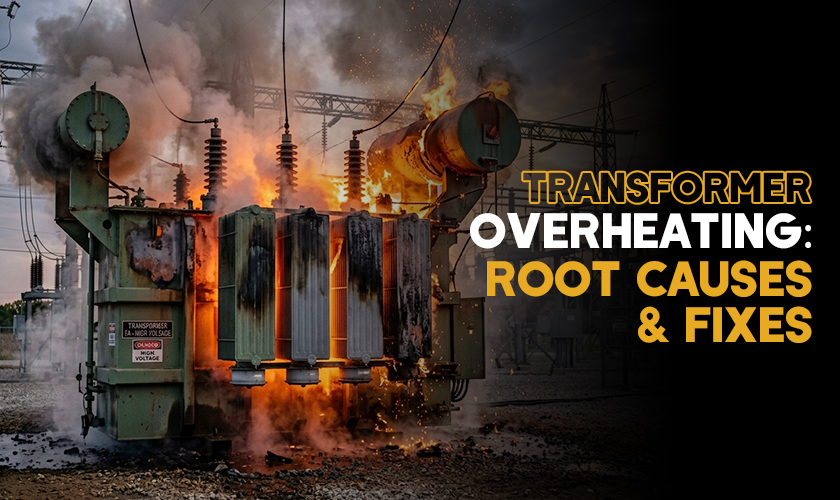
The transformer will not alert you when it is about to overheat. There is no signal light at the initial stages and no warning sign until it starts damaging your transformer. When you start observing the transformer's oil getting darker and the winding temperature rising above the standard levels, this means that the deterioration process inside the transformer has been going on for weeks or even months.
Overheating is cited as the cause of almost 70% of premature transformer failures in industrial plants, according to field data provided by Delta Wye Electric in December 2025. This fact alone is enough to encourage every plant manager to pay proper attention to their transformer's thermal management.
Source: Delta Wye Electric, Dec 2025 (Source)
This blog identifies the most common root causes behind a transformer overheating problem and offers practical fixes for each one. No generic advice; just specific steps you can act on.
Overloading: The Most Frequent Trigger
It seems quite simple, but it underlies most overheating problems in the industrial environment. Over the years, equipment has become outdated. There is new equipment to install; additional production shifts to make. The transformer, which was properly sized 5 years ago, may now be working close to or even beyond 90% of its rated capacity regularly.
As the level of current goes up above the rated one, the losses due to the copper rise to the second degree of that value. Only 10 to 15% overload leads to irreversible heat degradation of insulation. In case the transformer works continuously above 85% of its rated capacity, redistribution of loads should be considered.
Cooling System Failures
All transformers produce heat while working normally. The purpose of the cooling system is to dissipate the heat at a rate that is higher than its accumulation. In case cooling doesn’t happen, a transformer operating with a load can overheat very quickly.
For oil-based transformers, look into the amount of oil, its colour, and flow. If the oil becomes foggy or colored, that means it is deteriorating. In dry-type transformers, you need to check fans, ventilation openings, and clearances. Lack of air intake is an unexpected reason for transformer overheating problems indoors.
Insulation Degradation Over Time
Every insulating material has a certain thermal threshold. With the passage of time during the normal operations of the system, insulation is bound to become weaker in terms of its ability to resist a change in temperature due to constant heating, moisture, and physical stress.
Oil tests showing deteriorating paper quality or a decrease in dielectric strength are red flags that must never be overlooked. Plan for testing by way of dissolved gas analysis and insulation resistance tests. By diagnosing the issue at this stage, you will avoid reaching the transformer overheating stage.
Harmonic Distortion from Non-Linear Loads
This problem tends to take most electrical engineers by surprise. Harmonic currents are created in the system by variable frequency drives, rectifiers, and power electronics. The resulting heat caused by the extra harmonic eddy current and stray losses does not factor into the initial heating load calculation.
If you have since installed any kind of VFD equipment at your facility after the transformer was installed, you could very well be creating excessive heat within the system because of harmonic currents. This problem can be quantified by a comprehensive power quality study, which may suggest a K-rated transformer as a remedy.
Poor Site Conditions and Ambient Temperature
Transformers are calculated with the assumption that their ambient temperature is 40°C. Place it in an under-ventilated area, beside the furnace, which generates heat, or in any renovated site with zero ventilation, and you have already eaten up your thermal margin before starting operations.
The importance of proper site selection cannot be stressed enough. This may help avoid overheating issues without altering anything about the transformer itself. At times, the easiest solution to any transformer overheating issue could just be shifting the storage rack obstructing your cooling channels. It might sound like a simple measure, but we have witnessed many transformers revive themselves just by doing so.
Conclusion
The transformer overheating issue is usually never triggered by just one problem. It is often a mixture of various aspects such as overload, poor cooling, deteriorated insulation, and maybe even some harmonics. Individually, any of those issues would not pose a significant threat; when combined, however, they will definitely push the device beyond its maximum thermal tolerance.
All the causes mentioned above have their specific solutions that can be implemented in real-life conditions. Proper monitoring of the device's overload, maintenance of the cooling system, regular testing of the insulation, and site surveys all contribute greatly to extending the lifespan of your transformer.
Makpowerts specialises in building transformers featuring highly efficient cooling systems, premium quality insulation, and copper coils that minimise the effect of excessive temperatures under heavy industry-related loads.
Related Posts

A Guide to Effective Power Transformer Maintenance & Its Importance
Power Transformers are versatile and high-quality solutions for various.....

5 Things You Must Know Before Buying a Power Transformer
Power transformers are critical in the provision of constant electricity.....

What Is The Difference Between A Power Transformer And A Furnace Transformer?
Transformers are like the catalysts in the world of electrical.....

Guide to Installing, Commissioning, and Accepting Power Transformers
Power transformers are critical components in any electrical.....